
How a Laid-Off Atlassian Engineer's Sovereign Breakdown Started a Timer On Every Vibe-Coded Codebase
Vasilios Syrakis, an eight-year Atlassian veteran who built the Sovereign control plane before being cut in the March layoffs, on the maintenance timer running underneath every AI-assisted codebase shipping into production right now.

Make The Read Replica one of your go-to sources on Google

It'll be interesting with all these vibe-coded apps and AI-assisted apps to see how we handle that when we have people that are not really familiar with what they've created and the maintenance burdens appear.

Every large engineering organization is now reorganizing around more or less the same bet: that AI-assisted development will compress headcount, accelerate shipping, and rewrite the cost structure of building software at scale. The restructurings come paired with the same line, "we're funding this to accelerate AI" and the press releases and announcements are remarkably consistent.
On March 11, Atlassian CEO Cannon-Brookes wrote that the company would cut roughly 1,600 roles, or around ten percent of its workforce. "We are doing this to self-fund further investment in AI and enterprise sales, while strengthening our financial profile," he wrote. Atlassian's Q2 FY2026 numbers, per CRN's coverage, were not the problem: cloud revenue growth above 25 percent, Atlassian Rovo past 5 million monthly active users, the Jira AI agents in open beta. The layoff arrived alongside product momentum, not in spite of it.
One of the cut roles was a senior engineer who had spent eight years inside the part of Atlassian that almost no customer ever sees. He responded with the calmest-yet-coldest viral video of the year.
The eight-year tour
Vasilios Syrakis joined Atlassian as a systems engineer and ended his tenure as the principal author of the platform's Envoy-based control plane. In between, he said he built the system that handled auth, rate limiting, DoS protection, and access logs at the edge for the entire Atlassian Cloud, the thing customers feel as Jira loading or Bitbucket responding, without ever knowing the layer exists.
Two months after the layoff, he posted a screen-share to YouTube. Syrakis' breakdown video walked through Envoy, the Sovereign control plane, sidecar patterns for cross-cutting concerns, the DynamoDB and SQS plumbing underneath, the automated VM deployment system above. "I built this software and I called it Sovereign. You can actually go find that on Bitbucket. It's a public repo at least for now," Syrakis said.
The video is Spartan and never elevates quite to a level where it dunks on Atlassian. It is surprisingly measured and restrained, while still being proper viral rage-bait fodder. It plays more like a lone passionate engineer at his desk, walking through the architecture he owned, in the tone of an engineer who has explained it to new hires fifty times.
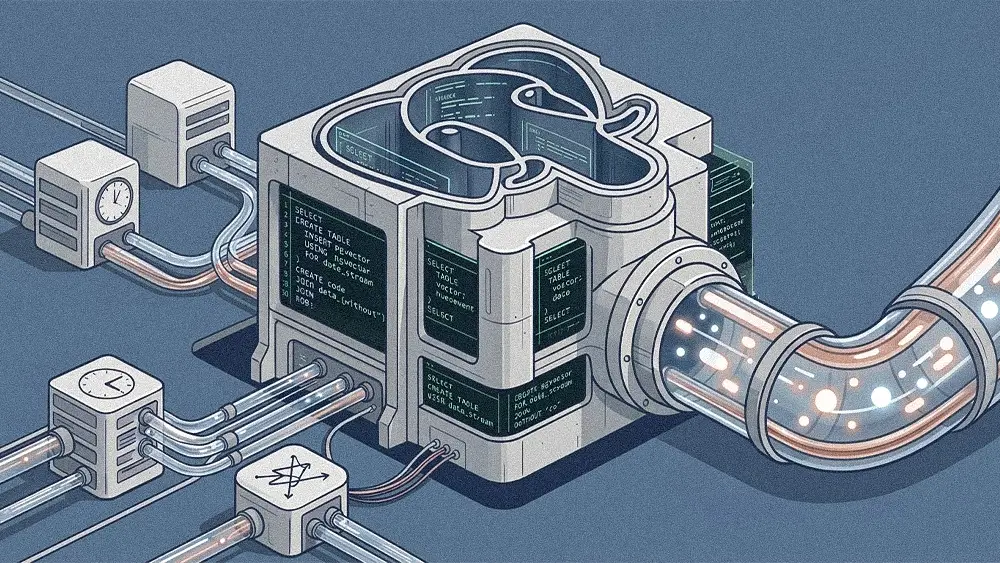
Most of the video covers the architecture of the platform layer. Syrakis walks through the full Sovereign stack: a FastAPI Open Service Broker backed by DynamoDB with an SQS-queued worker that handled provisioning tasks (CloudFormation, Route 53 records, CloudFront distributions), and an Envoy xDS management server he open-sourced on Bitbucket. That pulled context from the broker DB plus S3 and rendered Envoy clusters, routes, and listeners dynamically from templates. He said the edge fleet was roughly 2,000 Envoy proxies across about 13 AWS regions, provisioned by CloudFormation. Operationally, the team forced every Atlassian microservice, such as Jira, Confluence, Bitbucket, Status Page, off the platform's basic load-balancer onto Sovereign-managed edge so public exposure became an explicit, self-service configuration step instead of an accidental default.
A million views, and a room reading it unevenly
The video crossed a million views inside a week. The traffic came from X first, where engineers were split on the usefulness of the look behind the enterprise giant's technical curtain.
Ed Andersen posted on X, where the clip caught fire, calling it an "Incredible video by randomly sacked Atlassian engineer telling all about the entire company. Love this genre, like LinkedIn green banner with zero fcks (sic) given." A separate quote-tweet by cgtwts on X summarized the stack, "Envoy over enterprise load balancers > sidecars for auth + logging + rate limits > DynamoDB + SQS > automated VM deployments", and pulled another 662,000 views.
But not everyone read it as architecture. Theo took the loudest skeptic line, sarcastically quote-tweeting a shot at Syrakis' mic placement: "My JIRA dashboard at Twitch took over 2 minutes to load. The guy who built the infrastructure pointed the mic at the ground instead of his face. Coincidence? Probably."
The Hacker News thread split the same way. "This is absolutely worthless," one commenter posting as iLoveOncall wrote on the Hacker News discussion. "It's not hard to build a similar system, there's no moat in that. It's growing it and operating it that is difficult. All this guy accomplished is making himself unemployable."
"Instead of treating it as the tweet suggests on how to build next Atlassian, I think we should treat it as the engineering decisions made and the thinking processes behind it," a commenter posting as Imustaskforhelp wrote.
The post-viral follow-up
Seven days after the first video, Syrakis posted a second one. Syrakis' follow-up video. "I worked at Atlassian for 8 years and I did that because I enjoyed working there. I was sad to be laid off, but I am not angry at Atlassian for laying me off. They made a business decision," Syrakis clarified.
He then walked through his résumé, saying "I have never been to university. In fact, I didn't really finish high school. I stopped after the 10th grade, and I started working," he said. "When I joined Atlassian, I was a systems engineer, and after I delivered the edge load balancing project that I spoke about, I was promoted to a senior systems engineer."
A self-taught journey from help desk to systems engineer to senior, culminating in eight years on one control plane.
The juxtaposition between Syrakis' statements and those of the Atlassian CEO represents a larger growing disconnect between executive leadership and mid-senior practitioners.
"We fundamentally believe people and AI create the best outcomes," Cannon-Brookes wrote in the announcement. "Our approach is not 'AI replaces people'. But it would be disingenuous to pretend AI doesn't change the mix of skills we need or the number of roles required in certain areas. It does." The selection criterion he named for who stayed: "focused on retaining Atlassians with the skills to help us thrive as an AI-first company."
The skill mix changes. Fewer people. Different people. More AI in the loop. That is the bet every restructuring of this cycle is making.
The churn smell, and what he said about vibe-coded apps
The architecture walkthrough wasn't actually the closing argument of the first video. Toward the end, Syrakis turned the same lens on AI-assisted development directly.
"It'll be interesting with all these vibe-coded apps and AI-assisted apps to see how we handle that when we have people that are not really familiar with what they've created and the maintenance burdens appear," he said. "They don't appear at the beginning. There have not been enough changes."
He framed it around a heuristic he'd developed over eight years on Sovereign. Codebases churn unevenly. Certain modules accumulate change at a disproportionate rate, and the rate itself is a signal. "Once you notice that there is some churn, it's sort of a smell," Syrakis said. "It's an indication that that part of the service or project is going to keep increasing in size or complexity and something there needs to happen." That something, in his career, was usually centralization — pulling logic out of the distributed implementations that were churning and consolidating it behind a templated, validated interface that the dev teams couldn't misconfigure on their own.
He was measured on whether AI could solve the inverse problem when the bill came due. "You might be able to bind these areas quite quickly, get an LLM to perform the detangling for you. If we can do that, that's fantastic. But I don't want to be too optimistic just in case," Syrakis said. The skepticism wasn't about the model. It was about what gets lost when nobody on the team can name the trade-offs the code was making in the first place. "I actually don't think there is a perfect architecture. I think at all times you are making trade-offs, whether you're aware of them or not. I think it's better if you are aware of the trade-offs you are making, because otherwise you have no idea what's going on, and in future you will run into problems that you did not anticipate."
The mechanic-level claim Syrakis put alongside it is the one nobody on an earnings call has answered yet. The skill mix that changes hardest is the skill of reading-other-people's-code and detangling.
"If a thousand dev teams needed to deal with all this stuff plus more on their own service, it would be a tremendous waste of money for the company," Syrakis said of the platform layer he built. "It would slow down features. The customer wouldn't get their features when they need them. And stuff is already hard enough to deliver as it is."
Centralized platform logic existed because distributed implementation across hundreds of services was a tax nobody could afford. The same argument runs in the other direction for AI-assisted output: a thousand teams shipping code faster than any one team can read it is a tax with a delayed bill. The bet every restructured engineering org is making is that the bill never comes due, or that the LLM detangling Syrakis was cautiously optimistic about arrives before the churn smell does. The engineer Atlassian laid off would not bet that way.
The signal, once a week
Reporting, contributor perspectives and sharp notes from the people building with Supabase in the real world. No noise, no spam.