
How Mississippi Built The Nation's First Statewide AI Initiative For Education And Workforce Readiness
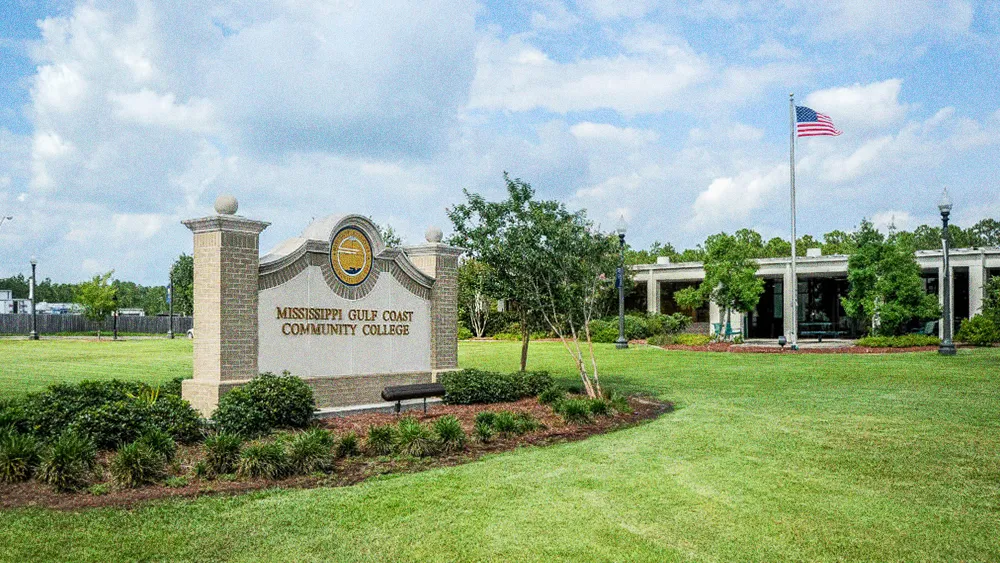
Dr. Kollin Napier, Director of the Mississippi Artificial Intelligence Network (MAIN) at Mississippi Gulf Coast Community College, discusses his work advancing AI literacy, workforce development, and the adoption of applied AI across Mississippi.
Make The Read Replica one of your go-to sources on Google

Relevance requires reinvention. We have to reinvent our standard processes and ways of thinking because this is a new time and a new opportunity.

The hardest data challenge most organizations face right now isn't storage, governance, or tooling. It's people. Specifically, it's the gap between the data and AI capabilities an organization has deployed and the workforce actually equipped to use them. Closing that gap at scale across departments, seniority levels, and job functions is the infrastructure problem that rarely makes it onto an architecture diagram but quietly determines whether everything else works.
The Mississippi Artificial Intelligence Network (MAIN) was built to solve exactly that problem, and the model it has developed offers a practical framework for organizations trying to move from isolated AI use cases to organization-wide capabilities. MAIN's work also aligns with the U.S. Department of Labor's AI Literacy Framework, which was released nationally in February 2026, but Mississippi began building this model well before that guidance was issued. As the nation's first coordinated statewide AI initiative, MAIN has already engaged thousands of learners across Mississippi through no-cost, self-paced AI courses and statewide partnerships, and Mississippi Gulf Coast Community College was recognized in 2026 as a Bellwether Award finalist for its role in developing MAIN. Rather than treating workforce readiness as a training event, MAIN treats it as a continuous priority, matching efforts led by enterprise leaders as they move from AI pilots to production-scale deployments.
Dr. Kollin Napier, Director of MAIN at Mississippi Gulf Coast Community College, leads this statewide network. He holds a Ph.D. with research concentrated on AI, cybersecurity, and software engineering. His push for accessible, demystified technology is grounded in technical expertise, workforce strategy, and practical implementation, highlighting both the realities and implications of the tools he asks people to use. He uses that expertise to pressure-test and update legacy processes. "Relevance requires reinvention," Napier said. "We have to reinvent our standard processes and ways of thinking because this is a new time and a new opportunity."
Demystification as infrastructure
A core part of MAIN's outreach is straightforward demystification. "You need to educate yourself and become aware of what AI is, what it is not, what is factual and true about it, and what is a myth or misinformation," Napier said.
MAIN operates through a coordinated statewide model that links all 15 community colleges, all public and private universities, K-12 education, state agencies, and industry partners across Mississippi. The model is notable not simply because it is statewide, but because it has moved beyond awareness into implementation, infrastructure, and workforce readiness.
Because software updates constantly, training must update constantly. To bypass institutional bottlenecks, MAIN leans on direct relationships with companies actively building the tech. "It's not something you can just do one time, and that's it in terms of literacy and education," Napier said. "It's changing literally every day." The underlying models and adoption rates shift quickly, which means any static curriculum is outdated before it ships.
Napier encourages institutions to establish internal AI task forces to keep pace with that change and manage their own AI governance and culture. "Have an internal AI task force. Host an event. Do all the things to bring people in the know and at the table."
Industry partnerships and talent pipelines
Through partnerships with organizations including NVIDIA, AWS, and Intel, MAIN connects local institutions to current tools, training pathways, and implementation support. External research suggests that workforce literacy programs reflecting real roles help employers retain staff, and MAIN applies that exact logic to local talent pipelines.
MAIN is also designed to strengthen Mississippi's talent pipeline by aligning AI education and workforce development with real employer needs across sectors. "Mississippi is one of many states in the nation that deal with brain drain," Napier said. "As we communicate with employers, we want to make sure that they understand how things are changing and that we are meeting their needs in terms of a workforce pipeline."
AI as a capability layer, not a job category
A core part of MAIN's employer alignment involves reframing how leaders think about AI inside their own organizations. For Mississippi, that means weaving AI into existing programs across manufacturing, healthcare, welding, and other fields, rather than building entirely separate tracks. This approach reflects how forward-looking enterprises are rethinking AI orchestration at the operational level.
Napier argues that treating AI as a universal skill enhancer, rather than an isolated IT function or standalone job category, is a necessary prerequisite for widespread adoption. "Stop thinking about AI as a singular role or singular job," he said. "We need computer science. I will highly advocate for that, being one myself. But we need to think about AI as more of a capability layer across every single career."
Catching up to that capability-layer view doesn't require a massive software budget or the ability to write code. Napier said the first step is simply getting leaders into a room to have a structured, honest dialogue. Interest from other states underscores MAIN's value as a proven statewide model for AI education and workforce readiness, one that others are now looking to as a practical framework to adapt.
Constraint as competitive advantage
Because Mississippi lacks the built-in advantages of large technology hubs, state leaders were forced to build a superior, cross-functional training ecosystem rather than rely on existing infrastructure. "Mississippi, in comparison to California, we're just a drop in the bucket in terms of population," Napier said. "What we're able to achieve is showing this statewide AI framework can be achievable in any other state."
In Napier's view, removing the mystique helps workers experiment and learn. Research on workplace AI indicates that lowering practical barriers helps employees make fuller use of new tools, a concept McKinsey describes as "superagency." State officials have been careful not to frame the literacy initiative as a mandatory compliance exercise. Neither the governor's office nor the universities is issuing ultimatums or tying participation to employment. Instead, MAIN removes cost entirely as an excuse not to participate. The network provides courses, micro-credentials, resources, and workshops at no cost to learners across Mississippi. "I'm literally just pulling up a chair and telling people all you have to do is come take a seat," Napier said. "It's available 24/7, no cost, and you just have to commit the time to learn about it."
The architecture that makes adoption scale
For CIOs and enterprise leaders watching this model, the takeaway is architectural. Continuous learning, cross-functional alignment, and open access to education are the conditions under which AI adoption actually scales. Mississippi built that architecture at the state level.
And for Napier, the opportunity in front of every organization right now is too significant to sit out. "AI is probably the greatest technical feat in terms of accessibility and opportunity that we've ever had," he said. "All you have to do is come take a seat."
The signal, once a week
Reporting, contributor perspectives and sharp notes from the people building with Supabase in the real world. No noise, no spam.